
SOFTENG 206
Welcome to SOFTENG 206!
This is the official website for SOFTENG 206, where you will find most of the materials needed to enjoy and do well in the course.
Canvas will still be used for announcements and grading purposes.
Course Outline
(Link to the Digital Course Outline)
Course Overview
This semester-long course is the foundational design course tailored specifically for the Software Engineering programme. It offers a practical, immersive experience in professional software development practices. Students undertake a project that is carried over the entire semester, starting with individual tasks to build proficiency in various technologies and advancing to a collaborative team project. The course emphasises the design, development, and evaluation of software applications while integrating different software technologies.
A key component of the course involves simulated client interactions during design meetings, where students develop their skills in requirements gathering, effective communication, and client engagement. The course places strong emphasis on professional practices, including ethical considerations in code reuse, understanding and adhering to software licenses, using version control systems effectively, and collaborating efficiently within a team.
Assessments are individual and group-based, focusing not only on the functionality and quality of the software developed but also on demonstrating professionalism in client interactions and teamwork. This holistic approach ensures that students are well-prepared for the professional challenges of the software engineering industry.
Learning Outcomes
By the end of this course, you will be able to:
- Apply systematic software development techniques, including testing, version control, and build systems, to develop reliable software applications.
- Collaborate effectively within diverse teams to plan, develop, and deliver software projects, demonstrating professional teamwork skills.
- Communicate professionally with clients to elicit requirements, present ideas, and provide software solutions.
- Demonstrate ethical and professional behaviour in software development, including adherence to code reuse ethics, software licenses, and professional standards.
- Design software solutions that meet client needs by integrating professional practices in a client-facing software development process.
SOFTENG 206 is NOT a “normal course”
SOFTENG is a design course
- This is the first design course you will be experiencing in your Software Engineering degree.
- There is no “exam”.
- There is no “test”.
- There is no “assignment”.
- There is only one Project:
- We start working towards the project from the beginning.
- Projects demand a “can do” and “bring it on” mentality.
- Projects demand a professional attitude.
This course is all about developing your professional skills in dealing with clients, so there is an expectation that you attend Design Meetings. We do not record these meetings, as they are interactive and require interaction from you.

If you would like to learn more, we encourage you to read the following article we published about this course in IEEE Software magazine:
“Fostering Professionalism in Software Engineering: An Early-Exposure Approach”
If it asks you to log in when downloading the PDF, click on the “Access Through Your Institution” option, and search for “University of Auckland” to log in with your student credentials.
Workload Expectations
This course is a standard 15 point course, and students are expected to spend 10 hours per week involved in each 15 point course.
As you will see on the Connect page, what happens in lectures differs from week to week. Earlier in the semester, we will have more “traditional-style” lectures, where we introduce new concepts and ideas. We then quickly transition into fully focussing on the project, where we focus more on the interaction with the client (“Design Meetings”) and the development of the project.
Academic integrity
The University of Auckland will not tolerate cheating, or assisting others to cheat, and views cheating in coursework as a serious academic offense. The work that a student submits for grading must be the student’s own work, reflecting their learning. Where work from other sources is used, it must be properly acknowledged and referenced. This requirement also applies to sources on the world-wide web.
All students’ assessed work will be reviewed against electronic source material using computerised detection mechanisms.
Using GitHub also helps demonstrate that you have done your work, as it will show how you have progressed the project throughout the semester. Even in the case of the group-based project, you must also be contributing to GitHub to demonstrate your contributions.
If you have any questions
The teaching team is excited be here and help!
- For face-to-face help, pop into the Drop-in Labs.
- For remote help, use Ed Discussion.
- For personal questions/concerns, email the instructor concerned.
- For administrative questions/concerns, email the course coordinator.
See the Connect page for more information about these.
Teaching Staff

(Course Coordinator and Instructor)
Valerio Terragni
Teaching Assistants

Steven Cho
Connie Ding
Grace Xu
Abbey Martinez
Ravindu Perera
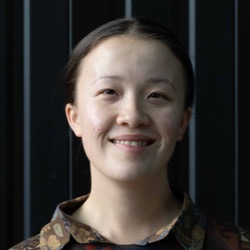
Rebecca Fitzpatrick