
Developing the Professional Mindset
So you wanted to be a professional software engineer? Prove it.
In SOFTENG 281, we told you that you’re not just learning to code. You were learning to think like a software developer.
In SOFTENG 281, we encouraged you to think of yourself as an apprentice, not a student.
But in SOFTENG 206, we’re going to take it a step further.
We’re going to challenge you to act like a software developer, and be a software developer.
You’re no longer an apprentice. You’re a professional software engineer. In this course, we’re going to treat you like one.
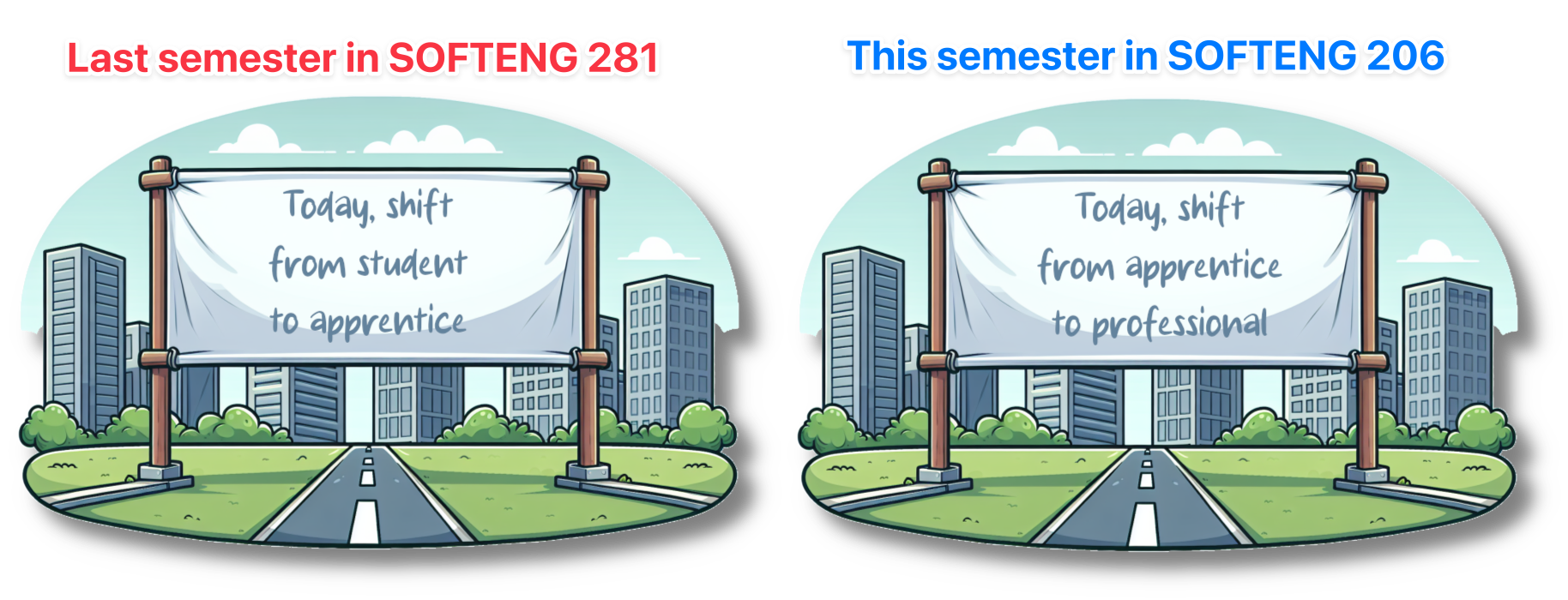
Evolve from apprentice to professional

Today, transform your mindset from apprentice to professional. Each project and client interaction in this course is your chance to shine as a developing software professional. By the time you step into that real-world scenario, you’ll be ready to demonstrate not just your technical skills but your professionalism, creativity, and teamwork.
Collaboration is key to success

Your peers are more than classmates; they are your teammates. Effective collaboration, clear communication, and mutual respect are the foundations for successful projects. Embrace the diversity of ideas and work together to produce exceptional solutions that you couldn’t achieve alone.
Engage clients with confidence

Communicating with clients will be a critical part of your role. Learn to listen actively and understand their needs, propose creative solutions, and ensure clear and effective communication. Confidence in your ability to engage clients effectively will set you apart and showcase your professionalism.
The Design Meetings are your chance to practice this skill.
Foster a creative and innovative mindset

Think beyond the obvious. Encourage a creative approach to problem-solving and be open to proposing novel ideas. Value the innovative thinking of your teammates and create an environment where creative solutions flourish.
Think for yourself, not just for marks

Clients are not going to give you a specific rubric to “get full marks”.
You need to think for yourself. You need to think about what the client wants, and what the client needs. You need to think about what the client doesn’t know they want or need. You need to accept that you might not get it right the first time, and that’s okay.
Accept responsibility for continuous learning
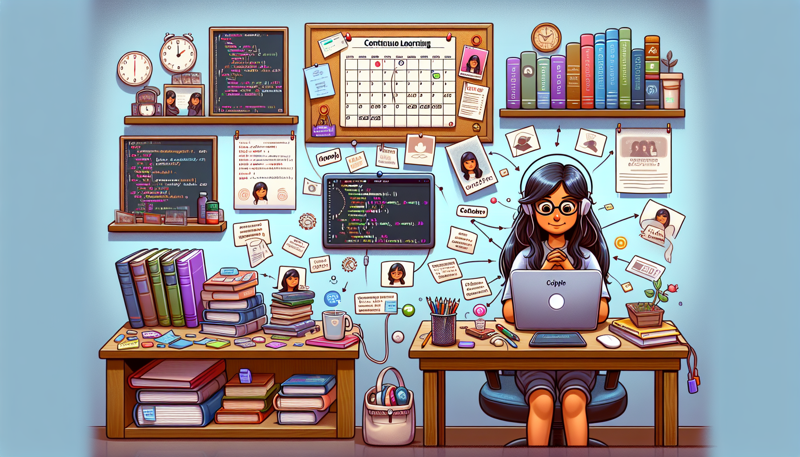
We won’t be teaching you everything you need to know. You need to be comfortable with the idea that you’ll be learning new things for the rest of your career—and that you’re responsible for making that happen. Adopt a mindset of lifelong learning. Your commitment to growth will ensure that you remain relevant and valuable in your career.
Reflect on your journey
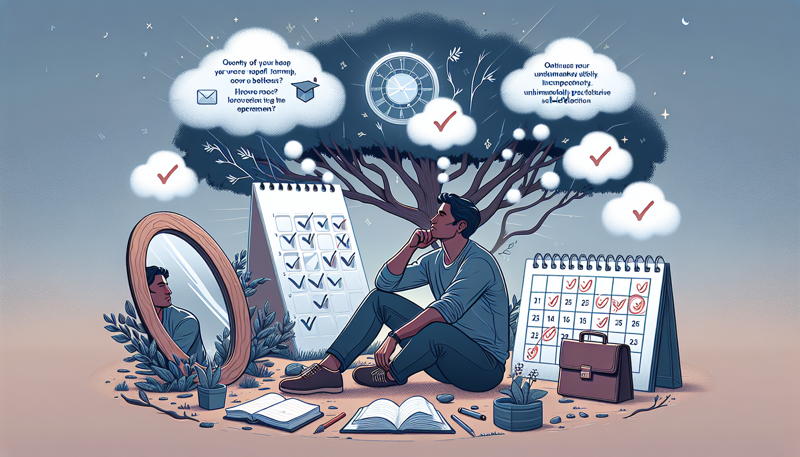
Regularly take time to reflect on your learning journey. Assess your progress, identify areas for improvement, and celebrate your successes. Reflection fosters self-awareness and continuous improvement, helping you to align your efforts with your aspirations.
Aim for excellence through quality
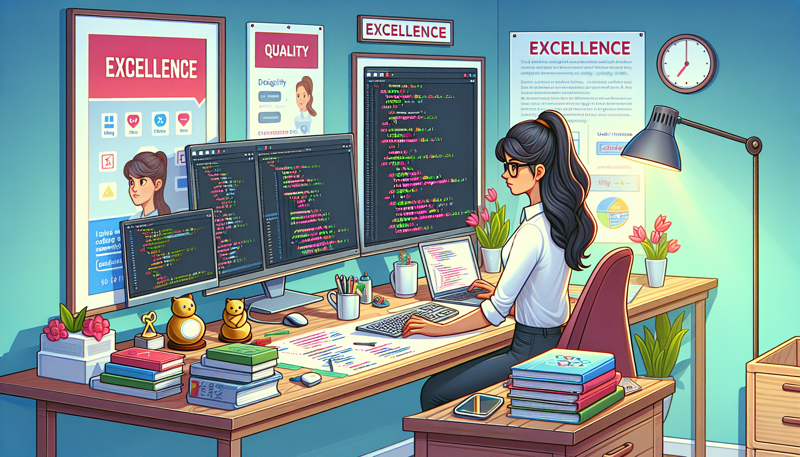
Strive for excellence in everything you do. Whether it’s code quality, design, user experience, or communication, aim to exceed expectations. Attention to detail and a commitment to quality will distinguish you as a top-tier professional.
Show adaptability in a dynamic field

Clients will change their minds. Technologies will evolve. Requirements will shift. Be prepared to adapt to these changes with flexibility and resilience. This flexibility will improve your problem-solving capabilities and make you a valuable asset in any team.